

Don’t wait for a leak to ruin your winter. Here is how to spot the warning signs early.
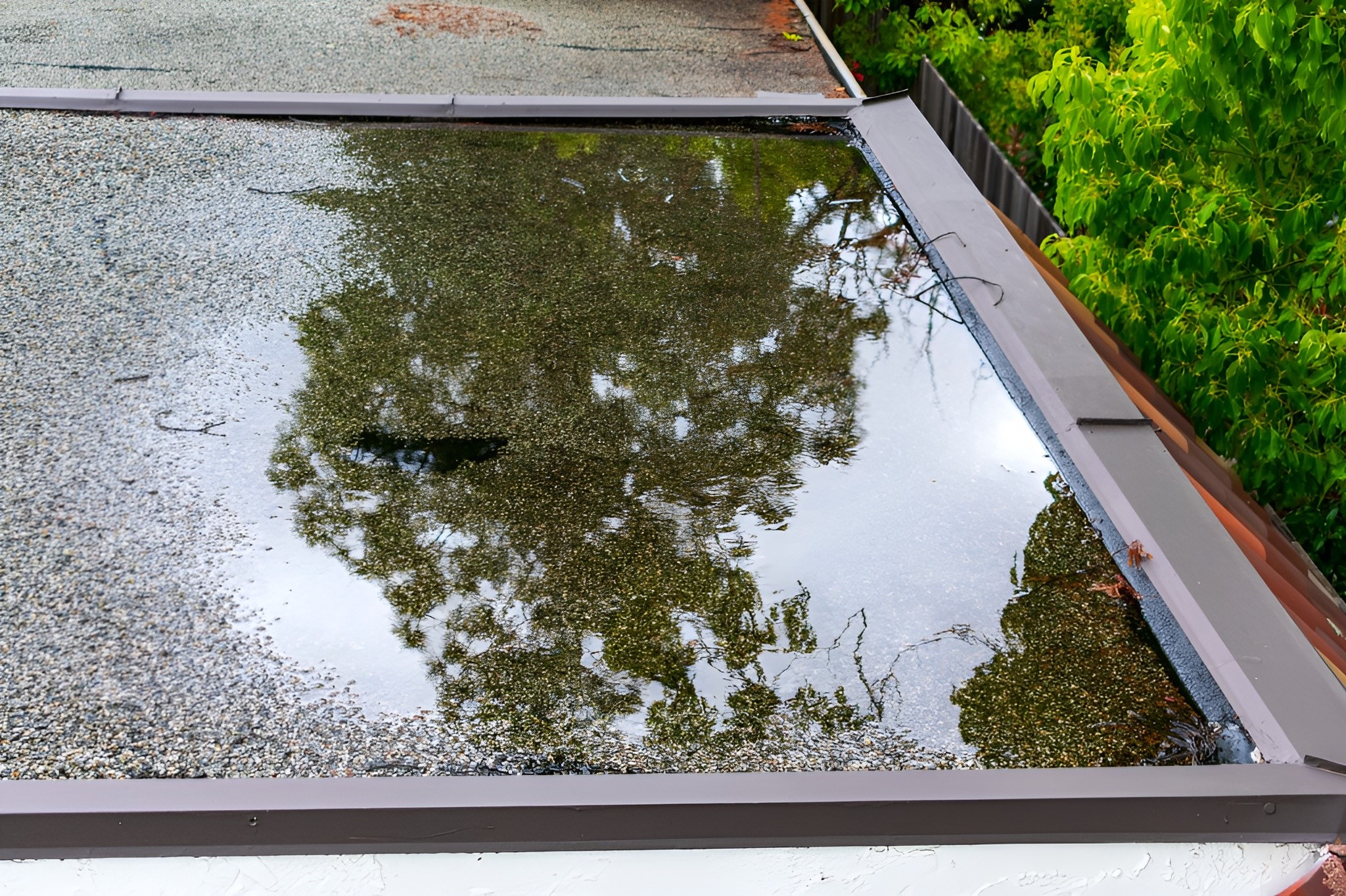
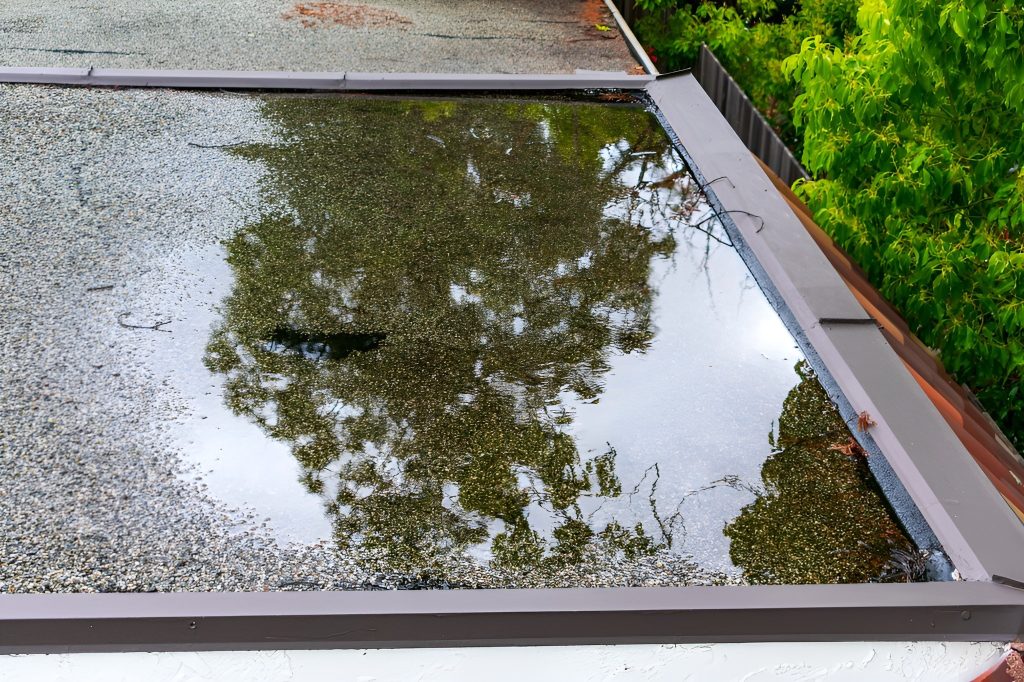
Sign 1: Ponding Water (The 48-Hour Rule)
It is normal for a flat roof to hold a little water after a heavy downpour. However, if you see puddles standing for more than 48 hours, you have a problem. This is known as “ponding.”
- The Risk: Standing water adds immense weight to the structure and slowly degrades the surface material.
- The Fix: If the timber battens have sagged, you may need to replace the battens and install a new EPDM Rubber Roof or high-performance felt to ensure correct drainage.
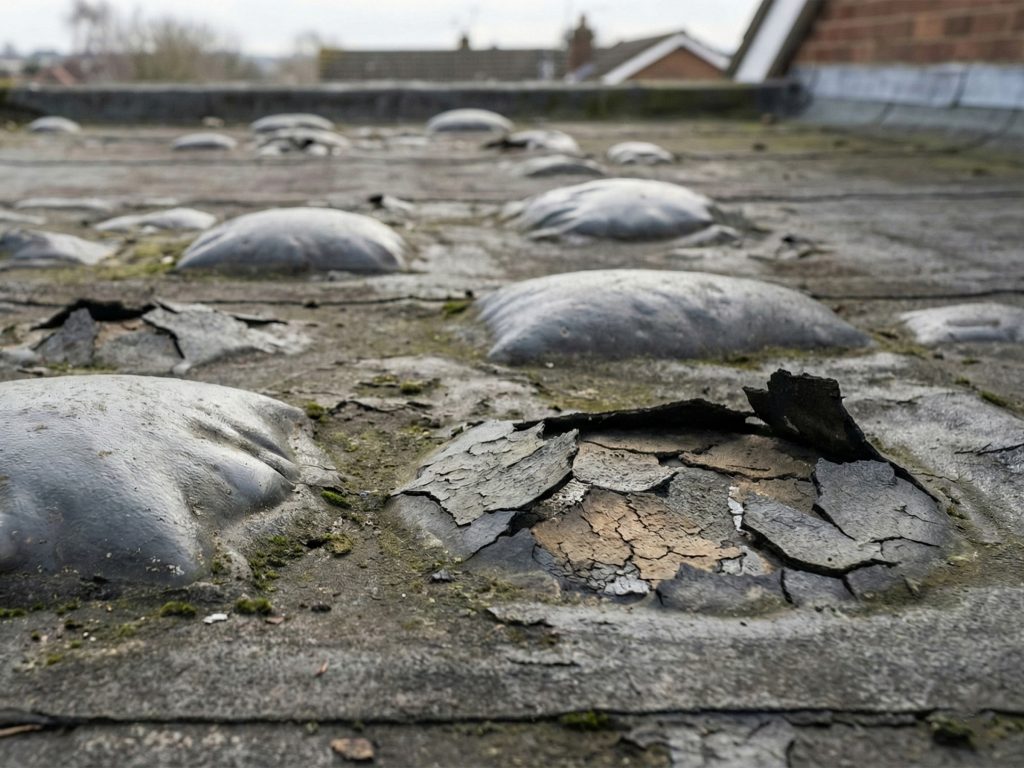
Sign 2: Blistering and Bubbling
Take a look at the surface of the felt or rubber. Does it look like the skin of an orange, or are there air pockets trapped underneath?
- The Cause: This usually happens when moisture gets trapped between the layers of the roof. As the sun warms the roof, the trapped air expands, causing blisters.
- The Risk: These bubbles eventually pop, leaving holes wide open for rainwater to enter.
- The Fix: The easiest way to fix is to replace with EPDM Rubber or Torch-On APP Green Mineral Felt
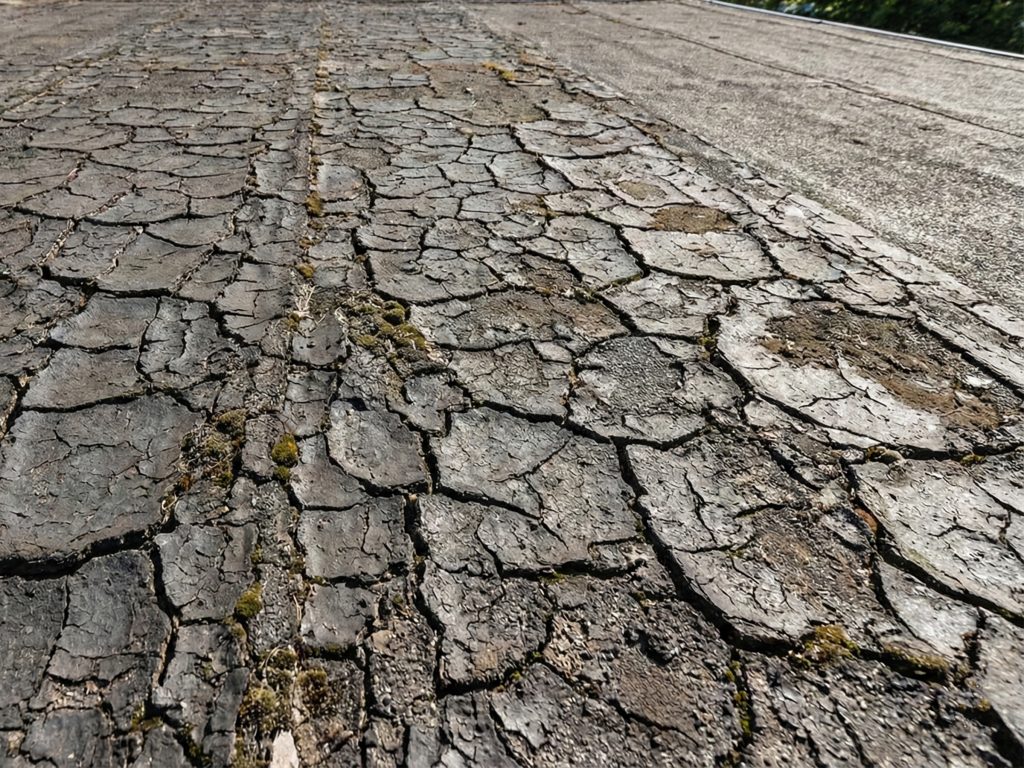
Sign 3: Cracking or “Alligatoring”
Over time, exposure to UV rays and the freeze-thaw cycle causes traditional roofing felt to lose its elasticity. Look for a pattern that resembles the skin of an alligator or dry, cracked mud.
- The Reality: Once your roof looks like this, it is past the point of repair. The material has become brittle and will likely split during the next frost.
- The Solution: Consider upgrading to a Rubber EPDM membrane, which stays flexible and doesn’t crack, even in extreme temperatures.
Sign 4: Flashing Coming Away at the Edges
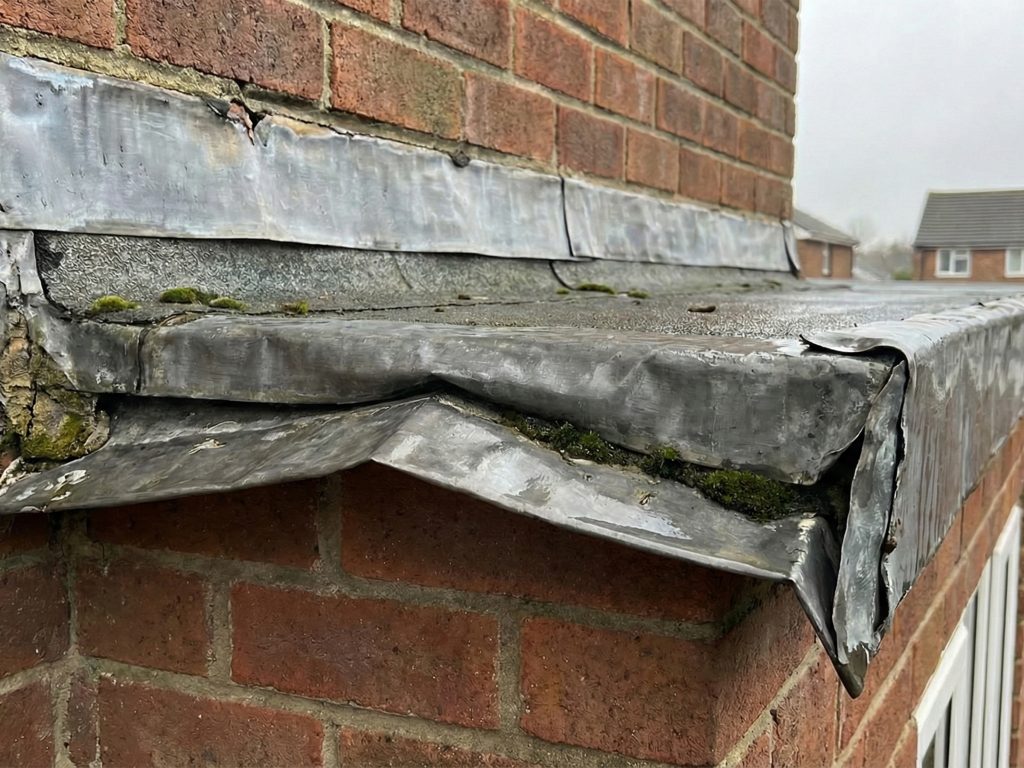
The edges of your roof (where the felt meets the wall or the fascia) are the most common entry points for water. Check the lead flashing or the felt edges.
- What to look for: Is the material lifting, peeling back, or flapping in the wind?
- Quick Tip: Sometimes this can be a quick fix with roof sealant or flashing tape, but if the lifting is widespread, the whole system has failed and will need to be replaced with new Lead Flashing
Sign 5: Moss and Lichen Growth
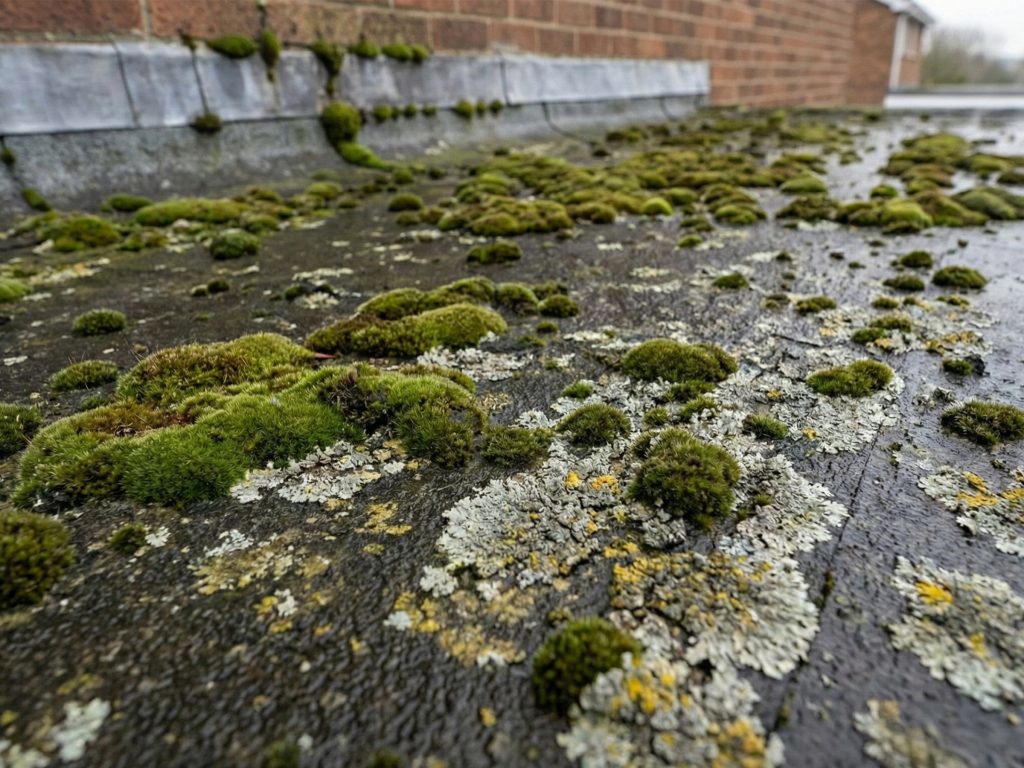
While a bit of moss might look rustic, on a flat roof, it is a sponge.
- The Problem: Moss holds moisture against the roof surface, speeding up the rotting process. If you have significant growth, it’s often a sign that the roof is holding too much water and the protective granules on the felt have worn away.
- The Fix: Start by carefully removing the bulk of the moss with a stiff broom—never use a pressure washer, as the high pressure will strip away the remaining protective granules and damage the felt. Once the roof is clear, apply a generous coat of fungicidal wash or moss killer to destroy the remaining spores.
Here at eRoofs.co.uk- We Have You Covered!
Whether you have spotted a small patch of moss or a major leak, ignoring the problem will only make it costlier in the long run. The good news is that you don’t need to be a professional roofer to get professional results. From emergency roof sealants for quick patches to complete, custom-cut EPDM rubber roofing kits for a full replacement, we stock everything you need to secure your home against the elements. Don’t wait for the next downpour—shop our full range today and get your project started with confidence.